"My System" by Aron Nimzowitsch review
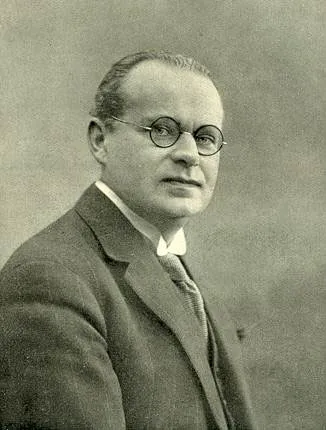
This work finally marked a new era in chess, but that could be understood only after almost a century. In distant 1927, many of the author’s ideas seemed incorrect and doubtful, for a number of reasons. In this review we will try to interpret his work in historical terms and its impact on modern chess. We would like to find out which ideas outlined in the book have been proven by time, and which were only methods that work in specific cases. We should mention that Aron Nimzowitsch was one of the strongest players of the early 20th century. He played successfully against all the luminaries of the time and earned the reputation of one of the most dangerous candidates for the chess crown. He played many instructive games against Jose Raul Capablanca, Alexander Alekhine and Emanuel Lasker. Garry Kasparov, in his book “My Great Predecessors”, ranked him approximately 5th in the world by strength during that period.
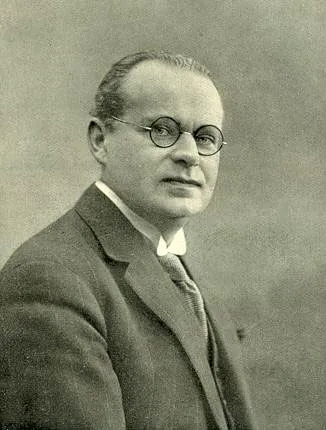 Aron Nimzowitsch
So what prevented Aaron from taking the chess crown? We think it was partly a lack of chess practice, or maybe other competitors were simply more talented — who knows. At that time it was not prestigious to be a professional chess player; everyone tried to have some other serious work and education. Capablanca told everyone he was a diplomat, Alexander Alekhine received a degree in law, and Lasker and Euwe studied mathematics. But there’s another reason that influenced Nimzowitsch’s results, and we think it’s very important: he was highly talented (arguably second only to Capa and Alekhine), but didn’t reach the success he could have because he was nervous, unstable, and highly unsuited to everyday life. Like most pioneers, he gave too much importance to his own discoveries. One can’t help recalling his heated dispute with a representative of the old school, Dr. Tarrasch.
What is the book “My System” about? In our opinion, this is not just a collection of “old recipes from grandmother”, but much more. The grandmaster tried to express his own method of chess study, his philosophy of the game. Later, only Mikhail Botvinnik tried to repeat this step, in his famous series “Analytical & Critical Works”. Today’s top players are not interested in sharing the secrets of their laboratories — that’s why we hardly ever see books similar to “My System” from Kasparov or Anatoly Karpov, though it would be very interesting to read them.
This book consists of 3 parts. The first explains the elements of chess — obviously, all of them were known long before, and almost all were formulated by Wilhelm Steinitz, the 1st World Champion. The third part of the book is devoted to illustrative games with the author’s comments. The most interesting for us is the 2nd part. One of the most valuable ideas introduced by Nimzowitsch was the principle of prophylactic thinking. Closely related to that is the principle of overprotection of key squares. These techniques are now organically included in modern chess. Separately, we can mention the idea of a blockade — we recommend studying the games of Tigran Petrosian, with his exchange sacrifices for the sake of a blockading knight. A special chapter addresses maneuvering, i.e. gradually increasing pressure on the opponent’s weaknesses.
Nimzowitsch’s strength was dynamic play. Looking more deeply at his style, it becomes noticeable that he preferred to play from a defensive stance, partly to prove his system. There were situations where all of the author’s pieces stayed on the last two ranks when he played Black — a challenge to the mainstream positional view of that time. It seemed as though he might ignore basic chess principles, for example not occupying the center with pawns, but he was still sometimes severely punished in games against brilliant attacking players such as Alekhine.
So what don’t we really like in this book? It sometimes shows a dogmatic approach on the author’s part — his laws do not always and everywhere apply, and this should be remembered. His recipe for attacking pawn chains from the base pawn is, of course, very good, but in the popular modern Chebanenko variation, 1.d4 d5 2.c4 c6 3.Nc3 Nf6 4.Nf3 a6 of the Slav Defense, Black violates this principle and feels very comfortable. Also, all these chess principles apply mainly to static positional factors, but as we know, one must not underestimate the dynamic aspects of a position. We believe the author was aware that he wrote in a very exaggerated way, but he believed this was correct from an educational point of view. Overall, though, we are very sympathetic to this work, because it helps everyone expand their positional arsenal. We certainly recommend the book.
Related book: “The Road to the Top” by Paul Keres
24th of December 2011