How to study chess openings, making own repertoire
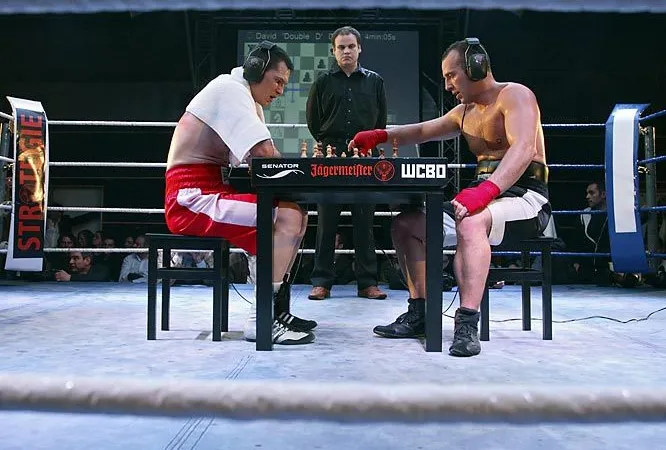
It’s not a big secret that a chess game may consist of several stages such as an opening, a middle game and an endgame. Each stage has to be studied separately. This article is fully dedicated to the opening stage. But before we begin to examine it in depth, as a minimum requirement everyone should know the basic principles of the middle game and endgame — otherwise this will be ineffective and just a waste of time.
A game takes its initial shape during the opening stage. The problem for chess is that there are countless variants there — therefore it is unclear where to start calculation and what to choose. The problem of choosing an opening varies for novice and experienced chess players. Previously, many authors recommended purchasing some openings encyclopedia, but now times have changed. Without much effort that job can be done by various chess programs, which have a best book of opening variations and bases of chess games. The most popular programs used by strong players are ChessBase MegaBase and Rybka Aquarium. In a pinch you can always use the online database at chessgames.com. For beginners we recommend starting with moves that begin with 1.e4 or 1.d4 for White. Obviously, for Black the choice will be wider. Usually it’s a good idea to browse the opening tree to see the general picture. Personal preference may help you choose favorite variants and most-liked positions. It is also recommended to ask more experienced players in a club for advice about which opening to choose.
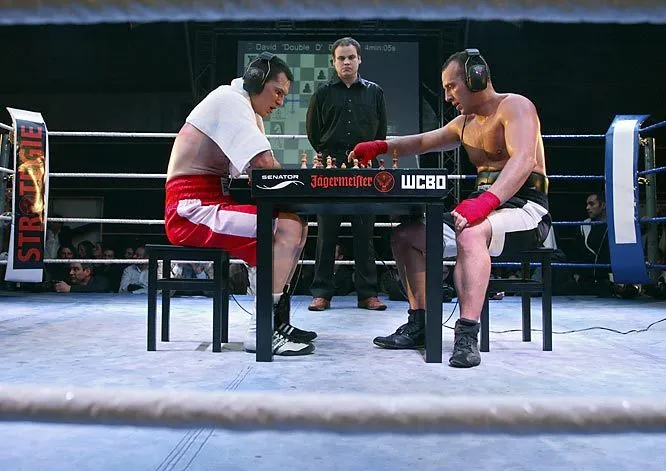 Critical position
It often happens that we pick openings which do not fit our style. This can significantly reduce sport performance. Perhaps in this case we suggest switching from positional openings to tactical ones, or more complicated ones, or vice versa. For example, the Spanish defense suits positional players for Black, and the Sicilian suits active players of combination style, both in response to White’s first move 1.e4.
It is always recommended to begin studying the variation tree with the most popular moves, and gradually move to more rare ones. Let’s say you have chosen some variant — how do you remember it? A good chess database could help in such a case. We need to find all the games played by strong players within the selected opening. Why not save somewhere into a workbook some remarkable games, typical piece maneuvers and plans? It is noticed that each opening is characterized by its own typical tactical themes and chronic weaknesses of the position. Top chess programs also allow you to create your own custom opening tree — for example, an opening repertoire for White and for Black is better saved in different books, so as not to be confused. For the novice chess player it will be enough to prepare a defense in response to 1.e4 and 1.d4. Do not forget to explore some not-too-ambitious way of development for Black against 1.Nf3 or 1.b3. Similarly we need to prepare such a schema for White. Let’s say a great deal of work has been done, key variants were chosen, typical plans were learned, piece maneuvers were studied with combination motives, and the opening tree is ready. Now it’s time to move on to the next step.
It’s a pity to say, but it is necessary to play many classic games to learn the openings well. It also takes a lot of time and money. To expedite this process we suggest playing chess on the internet — but this time should be spent usefully. Remember: super blitz games are prohibited! Try to play just rapid games, preferably with the addition of a few seconds after each move, let’s say 15+10. In the opening stage use only learned material. After each game, analyze it first without a computer. Remember — a computer must be used as a verification tool, it should not think instead of you.
Nowadays opening theory grows rapidly. It makes sense, even at the amateur level, to try to come up with a new and unexpected move which could force the opponent to spend extra time. A computer can accomplish such a job fast. Chess opening theory is limitless, but if you already have exhaustive knowledge for one color, then you can start to explore another, say more aggressive, one. No one knows when this knowledge can be useful, but it’s always a good idea to carry a backup plan.
Published on 1st of August 2011