What parents of young chess players should know
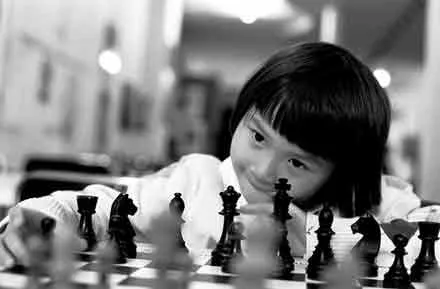
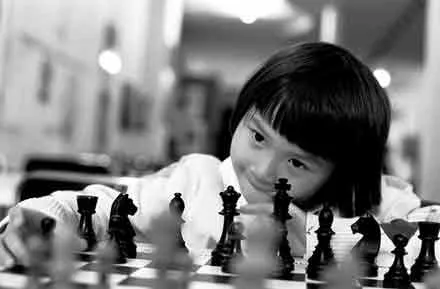
Ever thought about this question: why do some players constantly gain new achievements while others can’t accomplish anything significant? The reason lies in a skillful process of chess improvement. What usually happens in childhood? The child sees adults play and begins to show interest. It’s very important not to discourage the desire to learn something new. Many scientific studies have shown that chess exercises can improve the sharpness of memory, speed of thinking and instill the will to win. So try to combine the study of chess rules with the game’s atmosphere.
 My best move
How do you determine the potential of a young chess player? This is a very complex issue. I think the best way is to show the child to an experienced coach. But even in case of not-so-positive feedback, don’t worry, because no one has repealed the exception to the rule. For example, the talent of Andre Lilienthal began to unfold only at 16 years old — he later became the oldest living grandmaster and beat Jose Raul Capablanca. The first American Champion, Frank Marshall, learned to play at 17 — this did not prevent him from achieving great results, such as playing several matches for the world title. We may also note another great theorist and one of the strongest players of the late 19th century, Mikhail Chigorin, who began playing at age 16. Why is it still not suggested to start late? The brain quickly learns techniques in childhood, and tactical abilities may therefore not reach the highest level later. If we summarize this problem, we may conclude that it’s recommended to start studying chess as early as possible — optimally around age 4. And if everything goes smoothly, at age 16 one can hope to earn the title of grandmaster. But this is the ideal case. Now let’s talk about what to expect along the way. First of all, chess doesn’t improve gradually and smoothly, but with setbacks — it can be a very difficult period of training. Sometimes you do everything possible to improve your game and the result only gets worse. Here one should show more strength of will and relentless hard work. The human brain is designed in such a way that it needs to process new information over time. Therefore, in these moments, you might even be tempted to abandon chess study altogether. The desire to work will appear again, sooner or later.
We can also discuss the problem of Elo rating — the way to measure the strength of a player. Elo rating is not a linear scale, as it may seem, but an exponential one — every 400-point increase roughly means the player is 10 times stronger. If you examine the statistics of some countries, you can conclude that only 1 in 10-20 candidate masters ever becomes an international master. Once a player becomes a master, there’s roughly a 1-in-2 chance of becoming a grandmaster. But the real problem is that only 1 in 100 people who take up chess can ever become a candidate master. Therein lies the whole difficulty of preparation — it’s necessary to really stand out from other students.
Here we’re not even going to give pure chess advice — there are lots of useful books on the market. Note that, in our personal experience and the experience of our students, one should not rely on high sporting performance without a qualified personal trainer. Many parents don’t realize this, but if you set high goals for your child, send them to a chess section with an experienced coach or hire a personal trainer. We can also touch on the financial side of the issue. It’s believed that chess is one of the cheapest sports possible — what could be simpler than finding a board and a clock? But this is a profound mistake. It’s not uncommon for sending a young athlete to a tournament in another country to cost more than $1,500, and there are a few such tournaments each year. Not to mention that originally only rich people with unlimited free time played chess. In conclusion, there’s the example of American grandmaster Hikaru Nakamura, who joined the elite of world chess without any extraordinary help from others. This means that everything is possible, and everyone should hope for the best.
26th of August 2011