Current trends in women's chess
Current trends in women’s chess
Chess is a very democratic sport by nature — there’s no fundamental difference in who you play against, a man or a woman. Anyone can win or lose. But in practice, some interesting nuances appear. Historically, the first World Championships were held only among men; only in the early 20th century did women become involved in the race to identify the strongest player on the planet. In almost all pre-war tournaments, the unique Vera Menchik shone, dominating all major events like no other woman of her time. As the popularity of women’s chess grew, the level of the athletes increased. In the late 1980s came another outstanding chess player, Judit Polgar. Her phenomenal success is apparently due to competently structured training — she tried all her life to play only in men’s tournaments, which helped her acquire skills that her rivals lacked. However, after the birth of her child she lost some of the motivation and persistence necessary to fight at the highest level. Despite this, she remains in the elite club rated around 2700 Elo. So what do we have today? In first place by strength is still the same Judit Polgar of Hungary. Next, with some margin, come current World Champion Hou Yifan and Anna Muzychuk, rated around 2600 Elo. Then comes a very tight group of contenders, among whom the best-known is Humpy Koneru of India.
 Chinese youth team
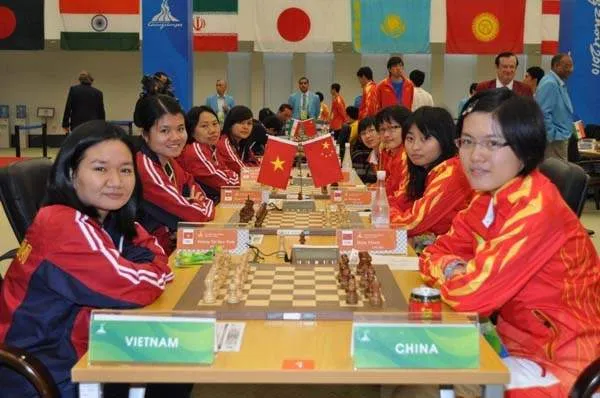
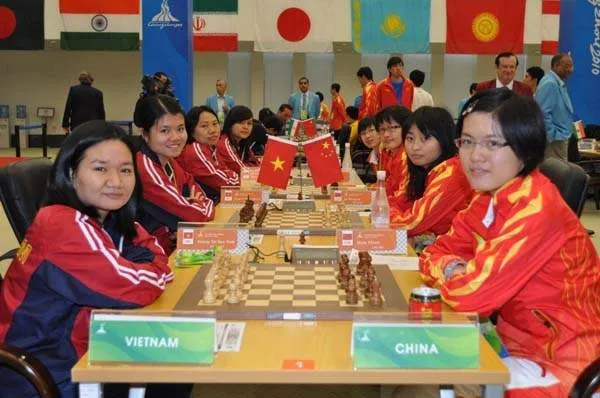
The first thing that comes to mind looking at this list is the generational change coming in the near future. It’s likely that within a few years Judit will give way to younger players. Who will take her place? It’s hard to name a specific player, but it seems clear the successor will be a representative of China. Let’s try to justify this choice. China has almost the largest population on the planet, and Russian chess players can no longer compete with them in annual friendly team matches. This suggests China has formed its own chess school over the past 20 years, with its own chess coaches. But the main feature of Chinese women’s chess is team spirit — pure individualism still reigns in Europe, where each player tries to promote her own name as much as possible in the media. Chess for women is also a good way to travel abroad and make useful contacts — in fact, it’s a kind of tourism, a subculture. Frankly speaking, for most women, chess doesn’t even pay off the cost of the trip; a permanent sponsor is required. The fact is that at the top level, women’s chess does pay off, and it needs support at the governmental level. In China, they understand this and are working on it — top athletes get special grants, housing, and paid trips abroad. It’s not so obvious yet, but within 5 years China will likely take a dominant position in the sport.
Let’s analyze the main features of the Asian chess school. The interests of the team come first; the individual always takes second place, even if that individual is the World Champion. This ensures continuity between generations — experienced players consider it their duty to train their replacements. In other countries this usually doesn’t happen: why produce a competitor for yourself? Have you noticed that the best players rarely seem eager to share their experience with the younger generation? For example, Garry Kasparov, after retiring from competitive play, never became a chess coach. Yes, he advised some players, such as Magnus Carlsen and Hikaru Nakamura, but that partnership wasn’t like student and teacher — Kasparov acted more like a second or a consultant, and his advice was more like recommendations. No one can claim to be a student of former World Champions like Boris Spassky, Bobby Fischer or Anatoly Karpov. The fact is that coaching requires an entirely different psychology — the need to give more than you receive should be paramount. But becoming a successful champion often cultivates an individualistic character and narcissism instead.
Another feature of Chinese players is good technical training. For these athletes, chess is not an art but a sport, a form of wrestling. From an artistic point of view, their games can lack interest, but that’s not proof they lack talent — they’ve simply learned the rules of prioritizing results over special effects. Among the best games or the best moves of the year, you’ll find almost no Chinese players, but on the other hand they rarely lose in one move — it’s very difficult to beat them. Good physical training is a required skill, and they have highly developed tactical vision — qualities that need great tenacity and just a bit of creativity. The recipe is simple: the more time you spend practicing studies and combinations, the better you’ll handle similar positions during a game. But don’t assume they have gaps in strategic thinking — they’ve brilliantly solved that problem by inviting foreign experts, with the idea of growing their own replacements so the demand for foreigners eventually disappears by itself. They’re also very well prepared in opening theory, which mainly requires a good memory and perseverance.
At this moment, the theory of Chinese chess dominance might seem a bit premature to the unprepared reader, but there’s a simple explanation: China is located quite far from the largest women’s open tournaments, so only a small part of their athletes travel overseas. There are a number of very strong chess players there who remain unknown to the wider public outside the country — they’re just waiting for their time.
Published on 25th of June 2012